How Our Engineering Team Optimizes Every Custom Dart Design Before Production
A custom dart design may look straightforward on a computer screen, but turning that design into a consistent, production-ready dart requires much more than simply machining the shape shown in a drawing.
For a professional dart brand, distributor, retailer, or sports equipment company, the difference between a good concept and a successful product often comes down to what happens before production begins.
A barrel can have the correct dimensions on a CAD drawing and still feel wrong in the hand. A grip pattern can look attractive in a rendering but be too aggressive for regular play. A tungsten barrel can meet the target weight while producing an undesirable balance point. A coating can look excellent on the first sample but create problems when the same design needs to be reproduced across hundreds or thousands of sets.
This is why engineering optimization is an important part of our custom dart manufacturing process.
When we receive a new custom dart design, our engineering team does not simply transfer the drawing directly to the CNC machine. We first evaluate whether the proposed design is technically practical, functionally appropriate, manufacturable, and consistent with the intended production requirements.
The goal is simple:
Build the dart that the customer designed — while making sure the design can actually perform and be manufactured consistently.
For custom tungsten darts, this process can involve everything from barrel geometry and weight distribution to grip depth, machining sequence, surface finishing, component compatibility, and quality-control requirements.
- Why Custom Dart Designs Need Engineering Optimization
- Step 1: Reviewing the Customer's Original Design
- Dimensional feasibility
- Weight Feasibility
- Step 2: Optimizing Tungsten Barrel Geometry
- Barrel Length and Diameter
- Step 3: Optimizing Weight Distribution
- Front-loaded designs
- Center-weighted designs
- Rear-weighted designs
- Step 4: Engineering the Grip Pattern
- Grip Depth Matters
- Step 5: Checking Machining Feasibility
- Tool Selection
- Step 6: Reviewing Tight Tolerances
- Step 7: Improving the Design for Production Consistency
- Step 8: Considering Surface Finishing
- Step 9: Checking Branding and Logo Placement
- Step 10: Prototype Evaluation Before Mass Production
- Dimensions
- Weight
- Balance
- Grip
- Surface
- Assembly
- Marking
- Step 11: Making Engineering Adjustments Before Production
- Why Engineering Optimization Matters for OEM Dart Brands
- Custom Tungsten Darts Require More Than a Good Design
- What Customers Gain From Engineering Support
- Reduce design risks
- Improve product consistency
- Protect the original concept
- Reduce unnecessary revisions
- Develop more competitive products
- Our Approach to Custom Dart Engineering
- From CAD Concept to Production-Ready Dart
- Frequently Asked Questions
- 1. Can you optimize a custom dart design provided by our company?
- 2. Can you help optimize custom tungsten dart barrels?
- 3. Can you manufacture a dart based on our existing sample?
- 4. How do you make sure a custom dart design can be mass-produced?
- 5. Why should we involve the manufacturer before finalizing our dart design?
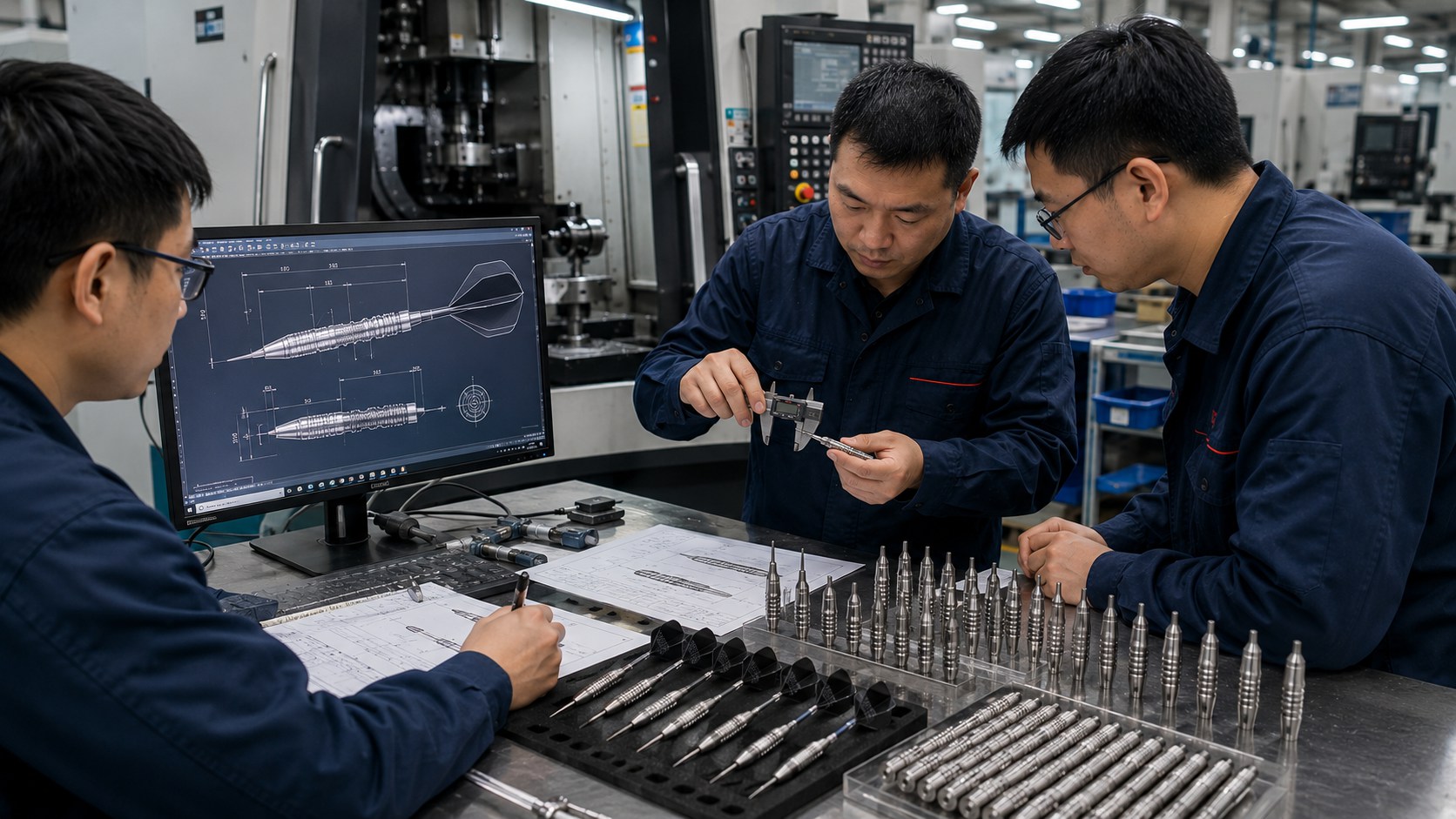
Why Custom Dart Designs Need Engineering Optimization
Custom dart projects usually begin with a concept.
The customer may provide:
- A CAD drawing
- A hand sketch
- An existing dart sample
- A competitor's reference product
- A product specification sheet
- A target weight
- A desired barrel length
- A preferred grip style
- A specific tungsten percentage
- A visual design concept
- A complete OEM/ODM specification
These materials provide the starting point, but they do not always answer every manufacturing question.
For example, a design may specify a barrel diameter of 6.8 mm and a target weight of 22 grams. However, the engineering team still needs to determine how the internal and external geometry will achieve that target.
Similarly, a drawing may show several rings, grooves, scallops, or knurled sections, but it may not specify:
- How deep each groove should be
- What machining tool should be used
- Which tolerances are required
- How the machining sequence should be arranged
- How the grip will feel after surface finishing
- How the design will affect weight distribution
- Whether the pattern can be reproduced consistently
These details become particularly important with tungsten darts.
Tungsten has a much higher density than common dart barrel materials, allowing manufacturers to create relatively compact barrels with substantial weight.
That advantage also means that small changes in geometry can have a noticeable effect on the final product.
A change in barrel diameter, length, groove depth, nose profile, or rear section can influence both the final weight and the distribution of mass.
For this reason, custom dart engineering needs to consider the complete product rather than individual dimensions in isolation.
Step 1: Reviewing the Customer's Original Design
The first stage of our engineering process is a technical review of the customer's design.
Before production, our engineers examine the design from several perspectives.
Dimensional feasibility
We review the overall:
- Barrel length
- Barrel diameter
- Nose diameter
- Rear diameter
- Center section
- Grip zones
- Threaded areas
- Tip connection
- Shaft connection
- Surface transitions
The purpose is to determine whether the proposed dimensions can be produced accurately using the appropriate machining process.
A design may appear simple visually but contain areas that require more careful machining.
For example, a narrow groove positioned between two raised grip rings may require a specific cutting tool and machining sequence. A sharp transition between two diameters may also require adjustment if the intended geometry creates excessive tool stress or poor surface quality.
Weight Feasibility
Weight is another major engineering consideration.
For tungsten dart barrels, the relationship between:
material density + volume + geometry = final barrel weight
must be considered during the design stage.
If a customer requests a specific barrel weight, our engineers evaluate whether the proposed dimensions provide enough material volume to achieve the target.
For example, a customer may request:
- 18 g
- 20 g
- 22 g
- 24 g
- 26 g
while also specifying a relatively short and slim barrel.
These requirements cannot always be treated independently.
A very slim barrel with a short length may not provide enough material volume for a heavier target weight without changing the geometry or material specification.
Instead of waiting until production to discover the problem, engineering review allows these issues to be identified earlier.
Step 2: Optimizing Tungsten Barrel Geometry
One of the most important parts of custom dart development is barrel geometry.
The barrel is the primary component responsible for the dart's mass distribution, grip characteristics, and overall physical dimensions.
For tungsten darts, engineering optimization often focuses on four areas:
- Overall barrel dimensions
- Weight distribution
- Grip geometry
- Manufacturing feasibility
Barrel Length and Diameter
Barrel length and diameter directly affect how the dart feels in the player's hand.
A longer barrel provides more surface area for grip placement and allows designers to distribute the grip across a larger region.
A shorter barrel can create a more compact shape and may be suitable for players who prefer a concentrated grip area.
Diameter also changes the physical feel of the dart.
A larger diameter can provide a more substantial grip surface, while a smaller diameter can create a slimmer profile.
However, increasing or reducing diameter also changes the amount of tungsten material contained in the barrel.
Therefore, engineering decisions need to consider both ergonomics and weight requirements.
Step 3: Optimizing Weight Distribution
Total dart weight is important, but total weight alone does not define how a dart behaves.
Two barrels can have the same overall weight while having different mass distributions.
For example:
- More weight toward the front
- More weight toward the center
- More weight toward the rear
- Relatively even distribution
can create different physical characteristics.
This is why our engineering team evaluates the barrel as a complete three-dimensional component rather than simply checking the final weight.
Front-loaded designs
A front-heavy configuration places more mass toward the nose of the dart.
This can be suitable for designs intended around a forward grip position.
Center-weighted designs
A more centralized mass distribution can create a different balance point and may suit players who naturally hold the dart around the middle of the barrel.
Rear-weighted designs
Moving more material toward the rear changes the balance point and can be appropriate for specific throwing styles.
The key point is that the customer's requested weight should not be considered separately from the desired balance characteristics.
Step 4: Engineering the Grip Pattern
Grip design is one of the areas where appearance and functionality can easily conflict.
A CAD drawing may show an impressive combination of rings, grooves, cuts, knurling, or other textures.
But a grip must ultimately work in the player's fingers.
Our engineering team evaluates factors such as:
- Groove depth
- Ring spacing
- Edge sharpness
- Grip density
- Grip-zone length
- Transition between grip sections
- Surface finishing
- Machining repeatability
Grip Depth Matters
A deeper groove is not automatically a better grip.
If the groove is too shallow, the texture may not provide enough tactile feedback.
If it is too deep or too aggressive, the grip may feel uncomfortable or interfere with smooth release.
For this reason, engineering optimization often involves finding a practical balance between:
Grip security + finger comfort + repeatability + appearance
This becomes especially important for products intended for regular commercial use.
A premium dart may be thrown hundreds or thousands of times during its service life, so the grip needs to remain functional rather than simply looking impressive when new.
Step 5: Checking Machining Feasibility
A custom design is only valuable if it can be manufactured consistently.
This is one of the most important principles in our engineering review.
The question is not simply:
Can this design be machined once?
The more important question is:
Can this design be manufactured repeatedly while maintaining the required dimensions, appearance, and performance?
That distinction is critical for OEM and ODM dart projects.
A prototype can sometimes be produced with additional manual adjustment or special machining attention.
Mass production requires a much more controlled process.
Tool Selection
Different barrel features may require different machining tools.
Depending on the design, the engineering team may need to consider:
- Cutting-tool geometry
- Tool diameter
- Tool reach
- Cutting depth
- Machining direction
- Tool wear
- Surface requirements
- Production cycle time
A complex grip pattern may require multiple machining operations.
The engineering team therefore reviews the design before production to determine whether the required features can be produced efficiently and consistently.
Step 6: Reviewing Tight Tolerances
Precision is particularly important for dart components that must connect together.
The barrel may need to work correctly with:
- Dart points
- Shafts
- Flights
- O-rings
- Other compatible components
Threaded areas require special attention because dimensional errors can affect assembly.
If a thread is too tight, components may be difficult to assemble.
If it is too loose, the connection may not provide the expected stability.
This is why engineering review includes critical dimensional areas rather than treating every dimension on a drawing as equally important.
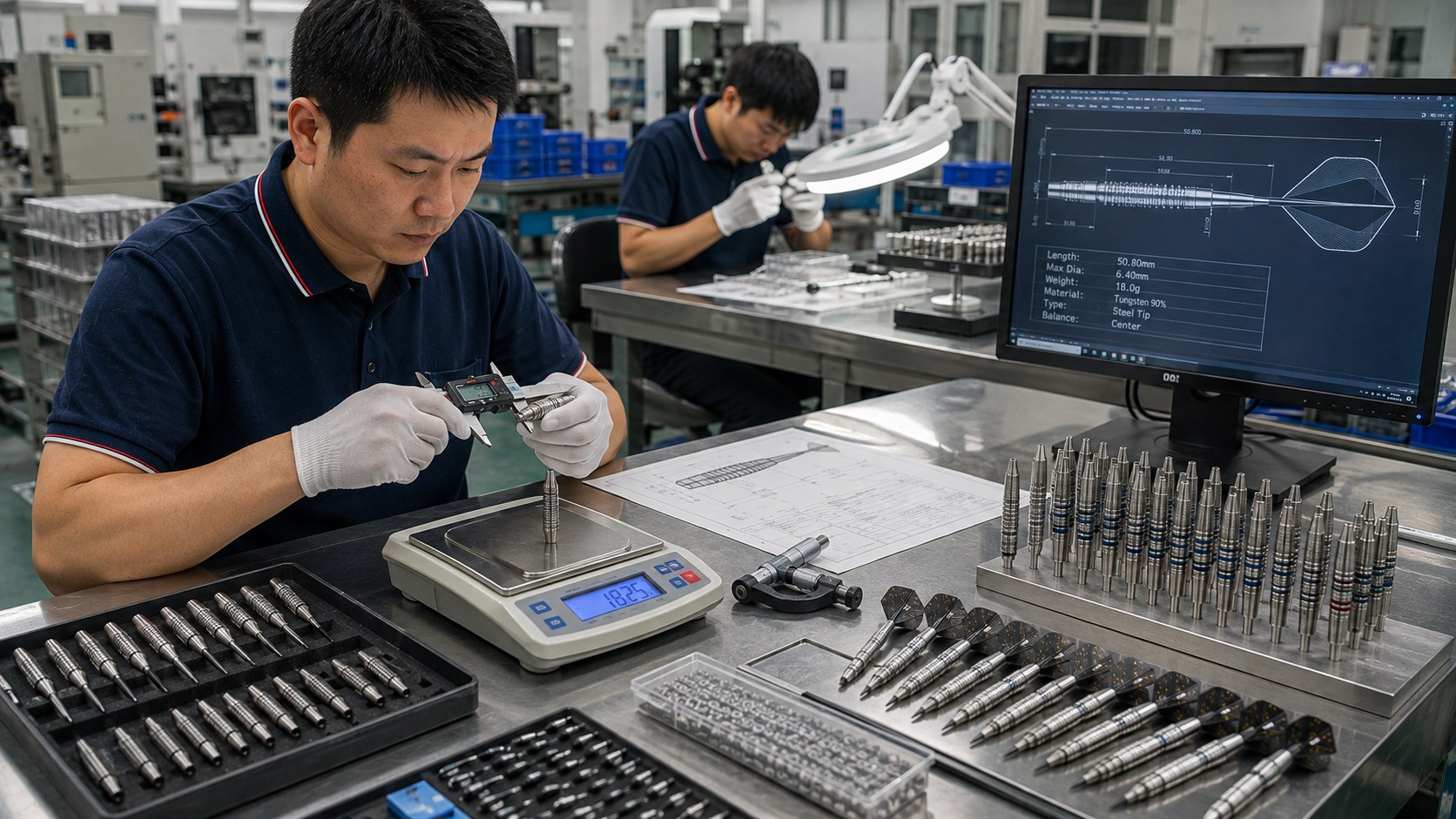
Step 7: Improving the Design for Production Consistency
A prototype can demonstrate that an idea works.
Production must demonstrate that the idea can be repeated.
This is a major difference between product development and manufacturing.
For example, suppose a custom dart design contains ten different grip sections.
The engineering team may examine whether each section can be produced with consistent:
- Diameter
- Groove depth
- Groove width
- Spacing
- Transition
- Surface finish
If these features are too sensitive to tool wear or machining variation, the design may need to be adjusted before production.
The goal is not to change the customer's concept unnecessarily.
Instead, the goal is to preserve the intended design while reducing avoidable manufacturing variation.
Step 8: Considering Surface Finishing
Surface finishing can significantly change the appearance and feel of a dart barrel.
Depending on the product design, finishing requirements may include:
- Polished surfaces
- Matte surfaces
- Coated surfaces
- Colored finishes
- Contrasting grip areas
- Laser marking
- Logo application
However, surface finishing is not simply a cosmetic step.
It can also influence how the grip feels.
For example, a finely machined grip may feel different after polishing or coating than it did immediately after machining.
Therefore, finishing requirements should be considered during the engineering stage rather than added as an afterthought.
Step 9: Checking Branding and Logo Placement
Custom dart projects frequently include branding elements.
These may include:
- Company logos
- Model names
- Weight markings
- Barrel specifications
- Decorative graphics
- Laser-engraved branding
The engineering team needs to evaluate whether the proposed logo position works with the physical geometry.
A logo placed directly across a heavily textured grip area may not produce the same clarity as a logo placed on a smoother section.
Likewise, very small lettering may require adjustments to maintain readability after engraving or finishing.
For premium dart collections, these details can have a significant impact on perceived product quality.
Step 10: Prototype Evaluation Before Mass Production
Once the design has passed the initial engineering review, prototype production can begin.
The prototype allows the team to evaluate the physical product rather than relying entirely on CAD data.
The engineering review can then focus on:
Dimensions
Are the actual dimensions consistent with the approved drawing?
Weight
Does the finished barrel meet the specified weight range?
Balance
Does the physical product provide the intended weight distribution?
Grip
Does the grip feel appropriate compared with the original design intent?
Surface
Does the finished surface match the required appearance?
Assembly
Do the components connect correctly?
Marking
Are logos and product markings clear and correctly positioned?
This physical evaluation is important because some characteristics cannot be fully judged from a digital model.
Step 11: Making Engineering Adjustments Before Production
One of the advantages of an engineering-led manufacturing process is that problems can be addressed while they are still inexpensive to correct.
If a prototype reveals that a grip section is too aggressive, the geometry can be adjusted.
If the balance point is not aligned with the product specification, the internal and external geometry can be reviewed.
If a logo is too close to a groove, the marking position can be changed.
If a particular machining feature is difficult to reproduce consistently, the engineering team can evaluate alternative dimensions or machining methods.
This process reduces the risk of discovering major problems after mass production has already started.
Why Engineering Optimization Matters for OEM Dart Brands
For an established dart brand, a custom product is more than a single SKU.
The design may become part of a broader product portfolio.
It may need to work with:
- Brand positioning
- Retail packaging
- Product photography
- Marketing specifications
- Distribution requirements
- Multiple production batches
This means consistency becomes extremely important.
A dart that looks excellent in the first production batch but changes noticeably in later batches can create problems for the brand.
Engineering optimization helps establish a manufacturing specification that can be followed consistently.
Custom Tungsten Darts Require More Than a Good Design
Tungsten provides manufacturers with significant flexibility in creating compact dart barrels.
However, that flexibility also means that the engineering process must be precise.
A successful custom tungsten dart project requires coordination between:
Design → Engineering → Machining → Finishing → Inspection → Assembly → Packaging
Each stage affects the final product.
For example, a change made during engineering may affect machining.
A machining change may affect the surface finish.
A finishing change may affect grip feel.
A dimensional adjustment may affect final weight.
That is why our approach is to evaluate the product as a complete system rather than optimizing each operation independently.
What Customers Gain From Engineering Support
Working with an experienced dart manufacturer can provide benefits beyond production capacity.
Engineering support can help customers:
Reduce design risks
Potential manufacturing problems can be identified before mass production.
Improve product consistency
The design can be converted into practical manufacturing specifications.
Protect the original concept
Engineering optimization focuses on improving manufacturability without unnecessarily changing the customer's intended product.
Reduce unnecessary revisions
Early technical review can prevent avoidable problems later in the development process.
Develop more competitive products
A refined combination of geometry, grip, balance, finishing, and branding can help create a more distinctive dart product.
Our Approach to Custom Dart Engineering
We believe the best manufacturing relationship begins before the first production order.
When customers approach us with a custom dart concept, our role is not simply to ask for a final drawing and start machining.
We look at the complete product-development process.
Our engineering team can review the design from the perspective of:
- Material
- Weight
- Dimensions
- Balance
- Grip
- Machining
- Tolerances
- Finishing
- Branding
- Assembly
- Production consistency
This allows us to identify potential issues at the design stage.
For customers developing custom tungsten darts, professional dart sets, private-label products, or OEM/ODM collections, this technical collaboration can make the transition from concept to production much more predictable.
From CAD Concept to Production-Ready Dart
A professional custom dart does not begin when the CNC machine starts cutting tungsten.
It begins much earlier.
It begins with a design that has been technically reviewed, physically considered, and optimized for manufacturing.
Our engineering team works to answer the important questions before production:
Can the design achieve the requested weight?
Will the geometry create the intended balance?
Does the grip provide the desired tactile characteristics?
Can the machining process reproduce the details consistently?
Will the surface finish support both appearance and function?
Can the final product be produced repeatedly at commercial scale?
When these questions are answered before production, the manufacturing process becomes more controlled and predictable.
That is the purpose of engineering optimization.
The objective is not to redesign every customer's product.
The objective is to make sure that the product they designed can become a reliable, repeatable, commercially viable dart.
Frequently Asked Questions
1. Can you optimize a custom dart design provided by our company?
Yes. A customer can provide a CAD drawing, technical specification, reference sample, sketch, or other product concept for engineering review. The design can then be evaluated for dimensions, weight, grip geometry, machining feasibility, finishing, and production consistency.
2. Can you help optimize custom tungsten dart barrels?
Yes. Tungsten barrel development can involve reviewing barrel length, diameter, material volume, target weight, grip structure, and weight distribution. These factors need to be considered together because changes to one area can affect others.
3. Can you manufacture a dart based on our existing sample?
An existing dart can be used as a physical reference for a custom development project. The engineering team can evaluate the sample's overall dimensions, geometry, grip characteristics, and other identifiable product requirements before creating a manufacturing specification.
4. How do you make sure a custom dart design can be mass-produced?
The design is reviewed for machining feasibility, critical dimensions, tooling requirements, tolerances, surface finishing, and repeatability. Prototype evaluation can then be used to identify issues before the design moves into larger-scale production.
5. Why should we involve the manufacturer before finalizing our dart design?
Early engineering involvement can identify potential manufacturing problems before they become expensive production issues. It also allows the manufacturer and customer to establish practical specifications for weight, dimensions, grip, finishing, branding, and production consistency before mass production begins.
How We Helped a Dart Brand Refresh an Existing Product Without Rebuilding the Entire Collection
Why Product Version Control Matters for Private Label Dart Brands
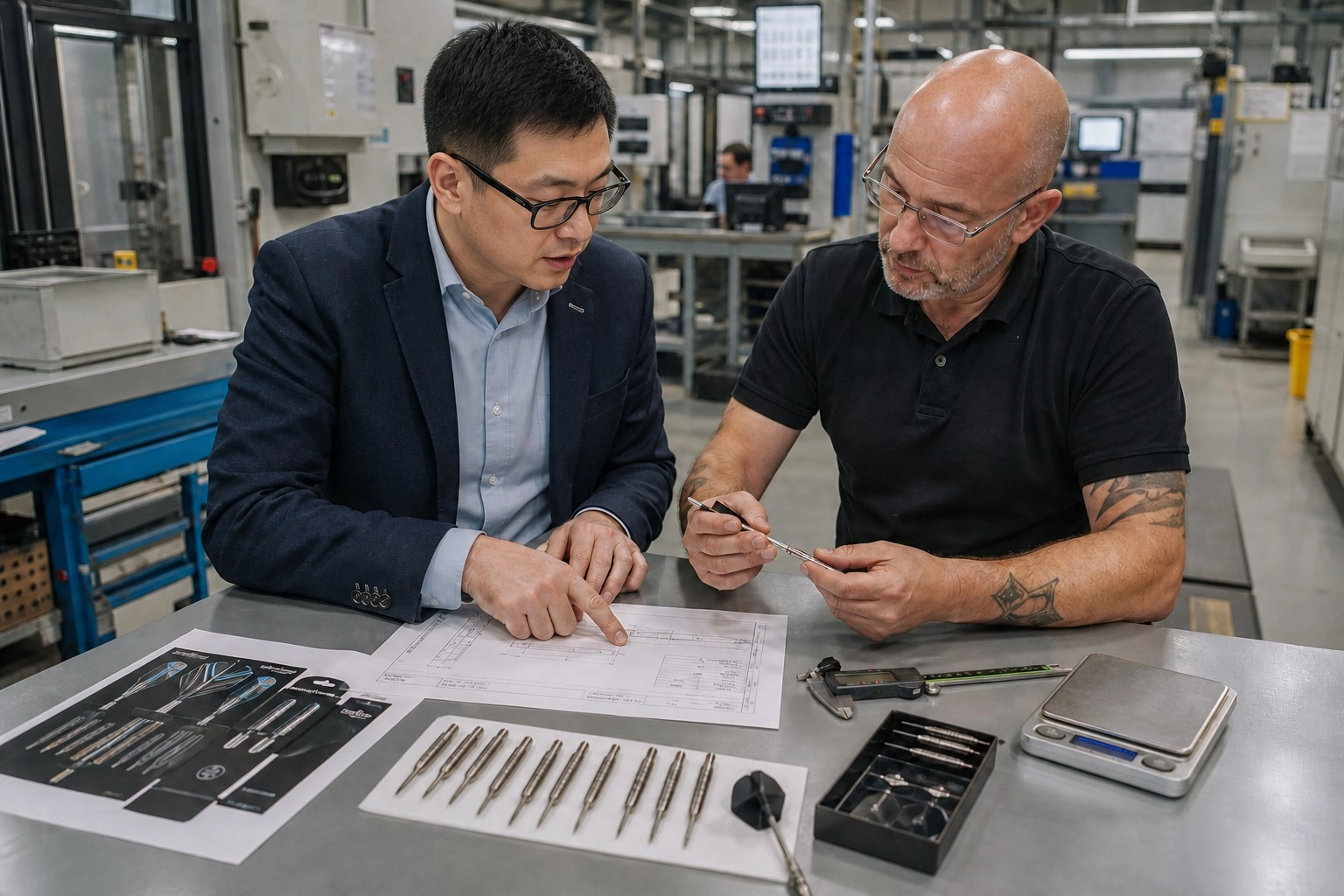
How We Supported a Retail Customer Through a Dart Product Specification Change

How to Calculate the Landed Cost of Imported Dart Products
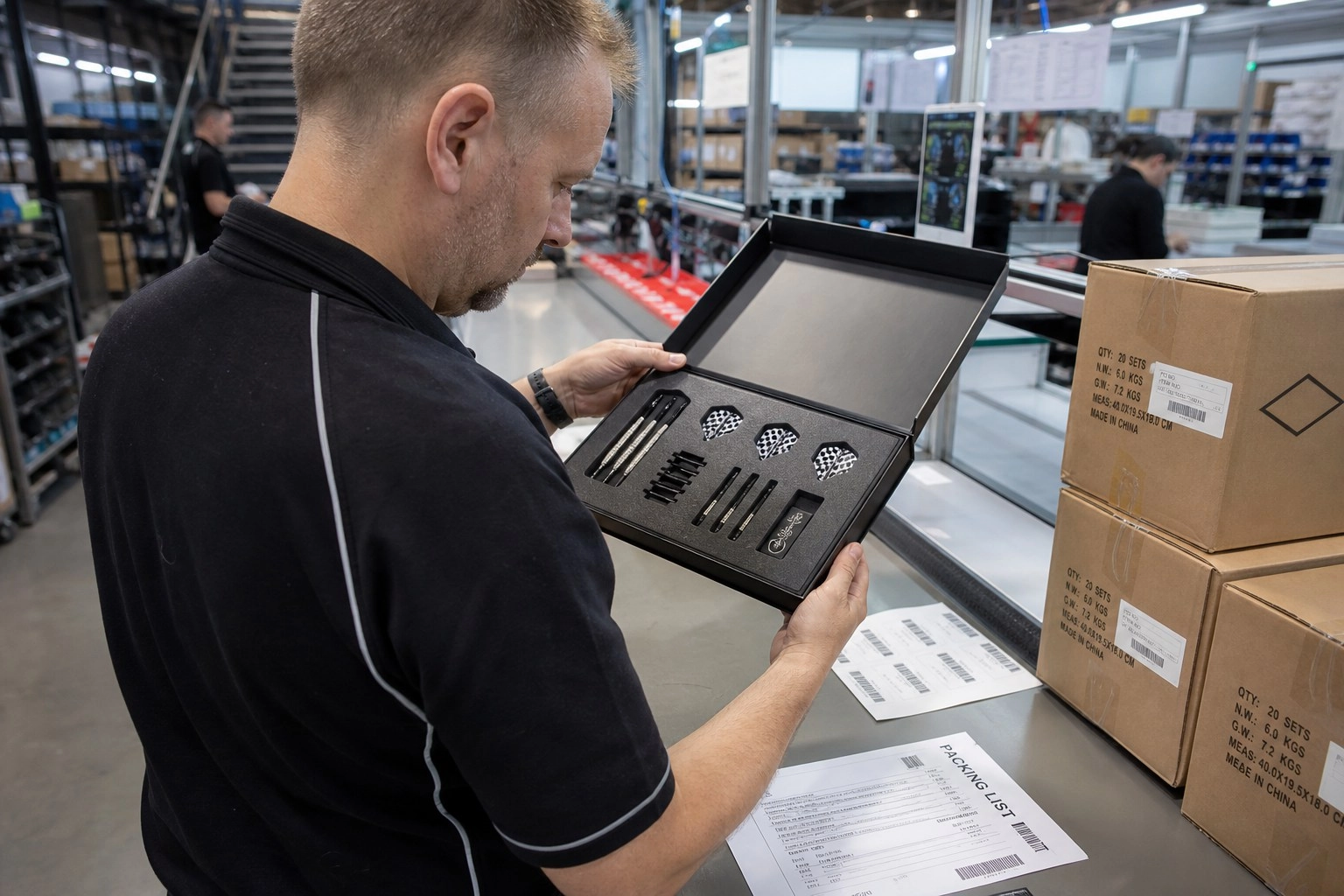
How We Helped an Online Dart Retailer Reduce Product Damage During International Shipping
Darts
How to ensure safety during the production process of dart products?
Through strict quality testing, including tip passivation treatment and material stability testing, it is ensured that there will be no accidental injuries during use.
Services provided
Do you provide brand registration support?
Provide advice and guidance to help customers quickly complete the brand registration process.
Dart boards
Does the dart board support rotation?
Yes, the dart board is equipped with a rotatable design to extend its service life.
Customized service
Can dart cabinets be used as home decorations?
Yes, high-end dart cabinets have both practical and decorative functions.
FAQ
Can I order custom-designed dartboards with my company logo?
Yes, SKIPJACK offers fully customizable dartboards and darts. You can provide your logo, design preferences, and other specifications for a personalized product.

AI Dart Camera Scoring System With LED Dartboard Lights Automatic Electronic Dart Scoring Kit Smart Dart Auto Scorer
Our Smart Dart Scoring System transforms a traditional steel-tip dartboard into a smarter, connected playing experience. With automatic score recognition, real-time tracking, and performance data, it eliminates manual scorekeeping and helps players focus on playing and improving. Ideal for home entertainment, training, pubs, bars, and dart clubs, it offers an easy way to bring smart scoring to your existing dart setup.
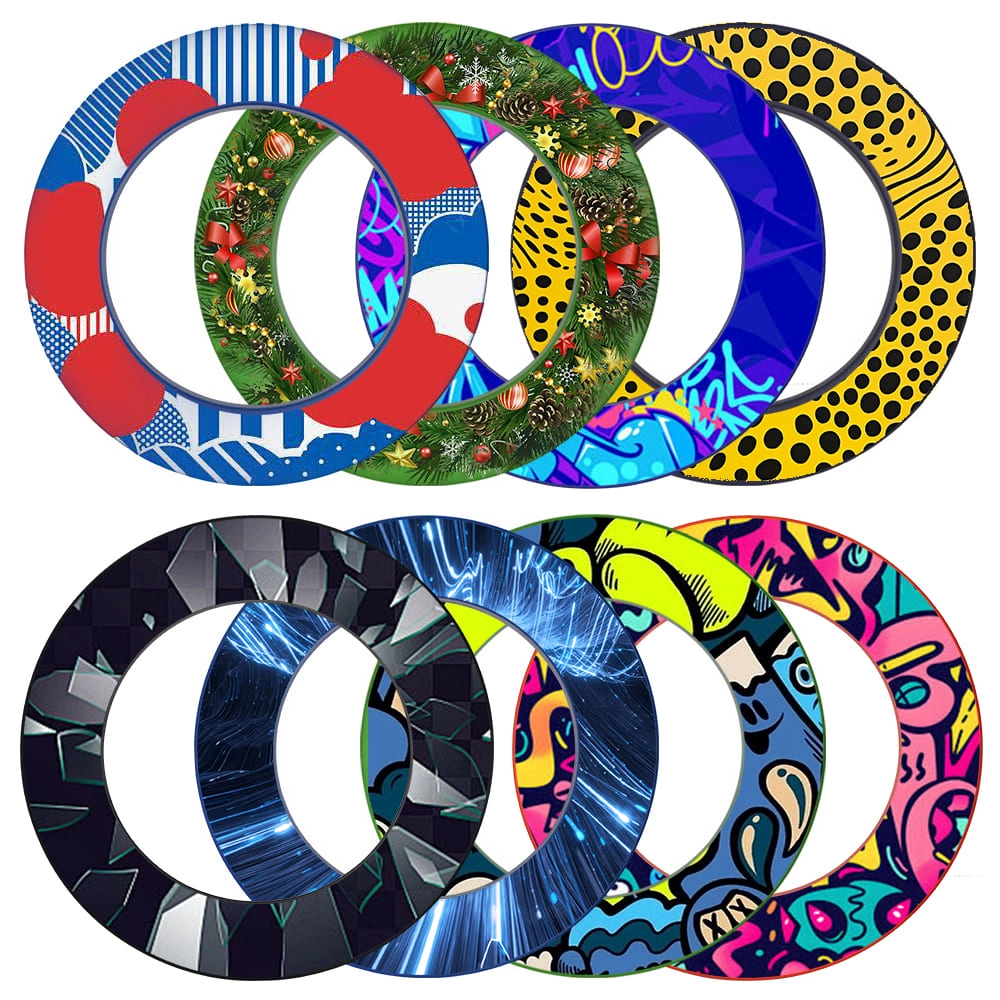
Wholesale custom pattern PU dartboard surround
PU dartboard surround is a dart board accessory made of high-strength polyurethane material, providing all-round protection to prevent darts from damaging walls or furniture and extend the service life of the dart board.

2BA Darts Flight Wholesale EVA Standard Shape OEM/ODM for Darts Retailers & Distributors
2BA Darts Flight designed for standard 2BA dart barrels. Made from durable PET material – tear-resistant, stable flight trajectory, and long-lasting performance. Custom color, logo & packaging accepted (OEM/ODM). Factory direct wholesale pricing. Ideal for darts retailers, sporting goods distributors & e-commerce resellers worldwide

EPU Dartboard Surround Bulk Order Available, OEM/ODM for Retailers & Distributors
EPU Dartboard Surround made from food-grade, eco-friendly EVA foam – biodegradable, odor-free & safe for home and commercial use. Fits standard 18" dartboards. Easy tool-free installation. Protects walls, absorbs dart impact. OEM/ODM available – custom color, logo & packaging accepted. Factory direct wholesale pricing. MOQ 50 pcs. Ideal for retailers, distributors & sporting goods importers.
Discover SKIPJACK’s Custom Dart Solutions
SKIPJACK offers darts custom-made solutions designed for excellence. Improve your game with our precision-crafted, customized darts.

At SKIPJACK, We offer darts customized solutions tailored to meet the unique needs of our clients through our ODM (Original Design Manufacturing) and OEM (Original Equipment Manufacturing) services.


Whatsapp: +8615919340906
SKIPJACK DARTS
SKIPJACK DARTS
SKIPJACK DARTS