How We Helped a UK Dart Brand Develop a Custom Tungsten Dart Set for Its New Product Line
Launching a new dart product is more complicated than choosing a tungsten percentage, drawing a barrel shape, and putting a logo on the finished product.
For an established dart brand, a new product has to satisfy several requirements at the same time. It needs to fit the brand's positioning, provide a consistent throwing experience, look distinctive enough to stand out in a competitive market, remain practical to manufacture, and maintain consistent quality when production moves from a small prototype run to larger quantities.
That was the challenge behind a recent project with a UK dart brand developing a new product line.
The company already understood its target market and had a clear idea of the type of product it wanted to introduce. What it needed was an experienced manufacturing partner capable of turning that product direction into a commercially viable custom tungsten dart set.
Our role was not simply to manufacture an existing drawing.
We worked through the product specifications, barrel structure, grip concept, component selection, sampling process, branding requirements, and production considerations so that the final product could move from concept to repeatable manufacturing.
This article explains the development process and the manufacturing considerations behind the project.
- The Challenge: Turning a Product Concept into a Manufacturable Dart Set
- Step 1: Understanding the Brand's Product Positioning
- Step 2: Defining the Tungsten Dart Specifications
- Weight Specifications and Player Confidence
- Step 3: Why Tungsten Was Important for the New Product
- Step 4: Developing the Custom Barrel Design
- Barrel Grip Patterns and a Consistent Throwing Experience
- Step 5: Balancing Differentiation with Familiar Dart Geometry
- Step 6: Developing the Prototype
- Weight
- Dimensions
- Grip
- Balance
- Appearance
- Branding
- Component Compatibility
- Step 7: Turning Prototype Feedback into Manufacturing Adjustments
- Step 8: Preparing the Dart for Mass Production
- Production Batch Consistency and Brand Reliability
- Step 9: Building the Complete Dart Set
- Step 10: Branding the Custom Tungsten Dart Set
- Step 11: Packaging as Part of the Product
- Step 12: Quality Control Before Shipment
- Weight Control
- Dimensional Control
- Grip Inspection
- Surface Inspection
- Logo Inspection
- Component Inspection
- Packaging Inspection
- What Made This Project Different?
- Why an Experienced Tungsten Dart Manufacturer Matters
- From a New Product Idea to a Repeatable Product
- Key Lessons from the Project
- 1. Start with the Product Positioning
- 2. Treat Weight as Part of the Complete Design
- 3. Use Differentiation Carefully
- 4. Prototype Before Mass Production
- 5. Design for Manufacturing
- 6. Establish Clear Quality Standards
- 7. Think Beyond the Barrel
- 8. Build for Reorders
- What Brands Should Prepare Before Starting a Custom Dart Project
- Product Positioning
- Target Weight
- Barrel Concept
- Grip Preference
- Branding
- Components
- Packaging
- Target Quantity
- Conclusion: Building a Better Custom Tungsten Dart Product
- Frequently Asked Questions
- 1. How long does it take to develop a custom tungsten dart set?
- 2. Can I customize the barrel design of a tungsten dart?
- 3. What should I consider when choosing a tungsten dart manufacturer?
- 4. Can a manufacturer produce a complete custom dart set instead of only the barrel?
- 5. How can I make my custom tungsten darts different from competitors' products?
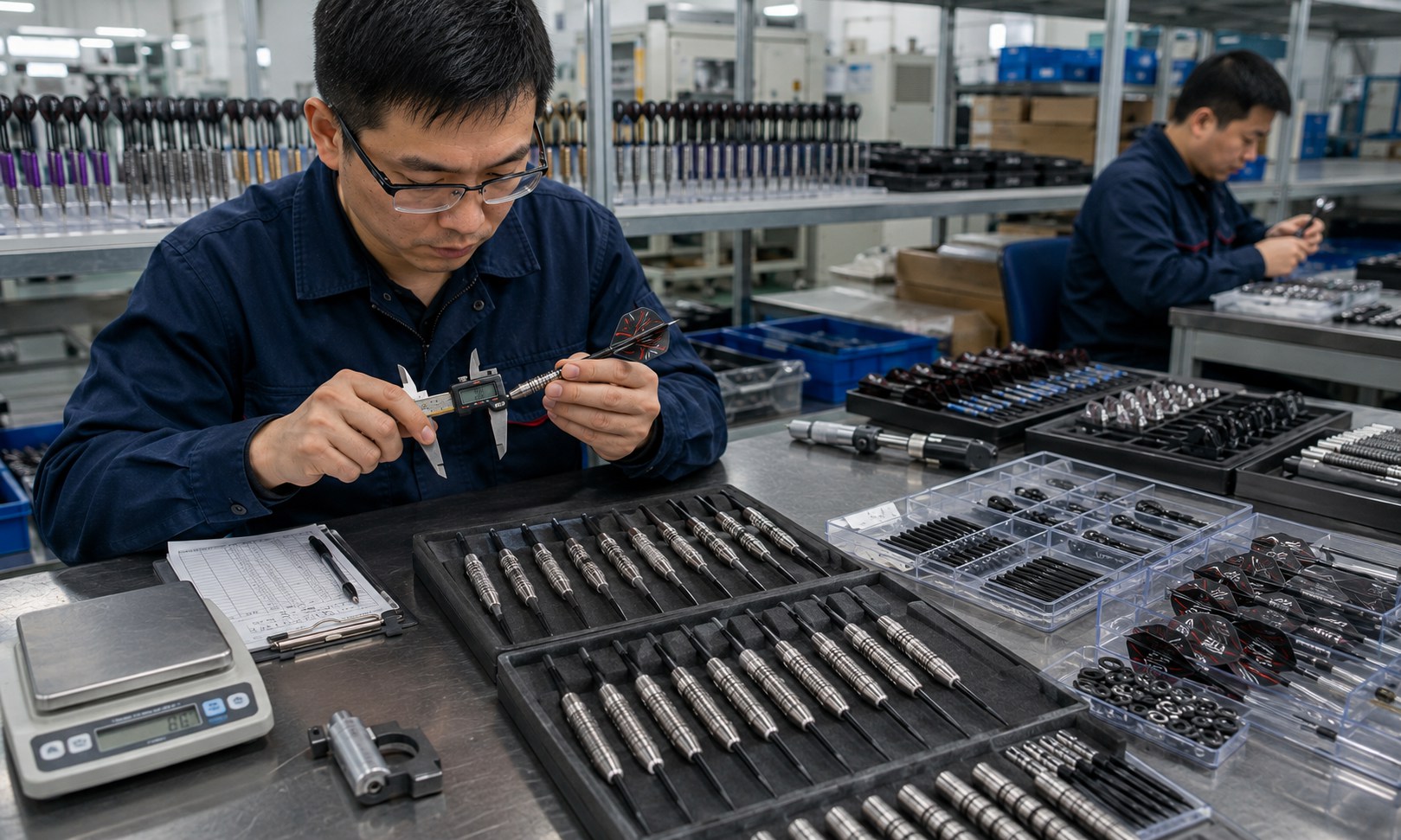
The Challenge: Turning a Product Concept into a Manufacturable Dart Set
One of the biggest differences between developing a dart product for personal use and developing one for a commercial brand is the level of consistency required.
An individual player can decide whether a particular barrel feels comfortable.
A brand, however, has to think about hundreds or thousands of customers receiving the same product.
That means a successful product needs to provide consistency across:
- Weight specifications
- Barrel dimensions
- Grip structure
- Balance characteristics
- Surface finish
- Logo application
- Component compatibility
- Assembly
- Packaging
- Production batches
The UK brand was looking to develop a new tungsten dart set that could become part of its broader product range.
The product needed to feel familiar enough for players to understand, while still giving the brand room to establish its own visual and functional identity.
This is an important distinction in custom dart manufacturing.
Differentiation does not always mean creating an unusual product.
In many cases, the better strategy is to retain familiar dart specifications while introducing controlled differences in barrel geometry, grip patterns, finishing, and branding.
This approach reduces the risk of creating a product that looks innovative but feels unfamiliar to the intended player.
Step 1: Understanding the Brand's Product Positioning
Before discussing CNC machining or barrel engraving, we first needed to understand where the new product would sit within the customer's range.
This matters because the same physical manufacturing approach can produce very different commercial products depending on the intended market position.
A beginner-oriented dart set may prioritize cost efficiency and straightforward construction.
A premium tungsten product generally places more emphasis on:
- Material positioning
- Barrel design
- Grip detail
- Surface finish
- Weight consistency
- Packaging
- Brand presentation
- Perceived product quality
For this project, the product was intended to strengthen the brand's premium product offering.
That immediately affected the development process.
The objective was not simply to manufacture a tungsten barrel.
The objective was to create a coherent premium dart set, where the barrel, components, branding, and packaging all supported the same product positioning.
Step 2: Defining the Tungsten Dart Specifications
The first technical stage was establishing the core specifications of the dart.
For a custom tungsten dart set, the specifications normally include several interconnected factors:
- Tungsten material specification
- Target dart weight
- Barrel length
- Barrel diameter
- Barrel profile
- Grip areas
- Balance point
- Point configuration
- Shaft compatibility
- Flight configuration
These specifications cannot always be decided independently.
For example, changing the barrel diameter can affect how the grip feels in the player's fingers.
Changing the barrel length can affect the overall balance.
Changing the internal geometry can influence how the required weight is distributed throughout the barrel.
This is why custom dart development requires more than simply matching a requested weight.
Weight Specifications and Player Confidence
Weight is one of the most visible specifications in a dart product, but its importance goes beyond the number printed on the packaging.
Players develop expectations around how a dart feels when they pick it up, position it, and release it.
For a commercial brand, consistency therefore becomes critical.
If two sets carrying the same product name feel noticeably different because of uncontrolled production variation, the problem can quickly become a brand reliability issue.
Our approach was to treat weight as part of the complete product specification rather than an isolated measurement.
The target weight needed to work together with the barrel geometry, dimensions, grip areas, and intended throwing characteristics.
Step 3: Why Tungsten Was Important for the New Product
Tungsten is particularly relevant when a brand wants to develop a more premium dart product.
Its higher density allows manufacturers to create relatively compact barrels while achieving the required weight.
This creates additional opportunities for barrel design.
A compact barrel can provide more room for controlled grip zones, changes in diameter, machining details, and brand-specific geometry without simply making the product excessively large.
From a product-positioning perspective, tungsten also gives brands a stronger foundation for premium product development.
The important point, however, is that tungsten percentage alone does not make a dart premium.
The final product is influenced by:
- Material specification
- Barrel design
- Machining quality
- Grip consistency
- Surface treatment
- Weight control
- Component selection
- Branding
- Packaging
A high tungsten percentage combined with poor manufacturing consistency does not automatically create a premium product.
For that reason, material choice was considered together with the complete manufacturing process.
Step 4: Developing the Custom Barrel Design
The barrel is the core of a dart set.
It is also where a brand has the greatest opportunity to create a recognizable product identity.
For this project, the barrel development process focused on balancing three objectives:
- Player familiarity
- Functional grip
- Brand differentiation
This is where we avoided an important mistake common in product development: changing too much simply to make the product look different.
A barrel can be visually unusual and still fail to deliver a convincing throwing experience.
Instead, the design direction focused on controlled changes to the barrel geometry and grip structure.
The goal was to create a product that looked distinctive while remaining understandable to players who were already familiar with conventional dart designs.
Barrel Grip Patterns and a Consistent Throwing Experience
Grip design is one of the most sensitive parts of a custom dart.
Different players prefer different levels and types of grip.
Depending on the design, a manufacturer may use variations of:
- Ring grip
- Micro ring grip
- Knurled areas
- Grooved sections
- Smooth transitions
- Combined grip zones
The important consideration is not simply how aggressive the grip looks.
The actual question is:
Does the grip provide a predictable interaction between the player's fingers and the barrel?
A grip that is too aggressive can feel uncomfortable.
A grip that is too shallow may not provide the expected control.
A grip with inconsistent machining can create differences between samples and production units.
For this reason, grip development needs to consider both the geometry of the individual cuts and the relationship between different grip zones.
The final design therefore aimed for controlled differentiation rather than excessive complexity.
Step 5: Balancing Differentiation with Familiar Dart Geometry
One of the key lessons from this project was that product differentiation does not have to mean abandoning familiar dart structures.
For a brand launching a new product line, there is a commercial advantage in creating something that feels recognizable to the target customer.
Players already understand common dart proportions, grip locations, and weight categories.
A successful custom design can build on that familiarity while adding brand-specific refinements.
This can include:
- Subtle changes to barrel profile
- Brand-specific grip patterns
- Different transitions between smooth and textured areas
- Controlled dimensional changes
- Distinctive finishing
- Logo placement
- Matching accessories
This creates differentiation without unnecessarily changing the fundamentals of the throwing experience.
The approach aligns with a broader principle in long-term dart product development:
Differentiation should serve the product rather than become a gimmick.
A product that remains familiar to players but is not overly commoditized can have stronger long-term potential than a design built entirely around short-term visual trends. Your source material specifically emphasizes avoiding oversaturated designs, retaining player expectations, and using brand-specific refinements within proven tungsten structures.
Step 6: Developing the Prototype
Once the core design direction was established, the next stage was prototype development.
The prototype is one of the most important stages in custom dart manufacturing because drawings and specifications cannot completely predict how a finished barrel will feel in the hand.
A prototype allows the brand to evaluate the actual physical product.
The review process can include:
Weight
Does the finished barrel match the intended specification?
Dimensions
Does the actual diameter and length correspond with the design?
Grip
Is the grip strong enough without becoming uncomfortable?
Balance
Does the distribution of mass match the intended product concept?
Appearance
Does the surface finish communicate the intended product positioning?
Branding
Is the logo placement visually balanced?
Component Compatibility
Do the shaft, flight, point, and other components work together as intended?
This stage is particularly important because it allows adjustments before mass production.
A strong sampling process reduces the risk of discovering design problems after production has already started.
Your source framework specifically identifies the sampling process as a way to support faster decisions, rather than allowing unresolved details to move into production.
Step 7: Turning Prototype Feedback into Manufacturing Adjustments
A prototype should not be treated as a final product simply because it looks good.
The purpose of sampling is to identify what needs to be improved.
During product development, feedback may relate to:
- Grip depth
- Grip location
- Barrel diameter
- Surface appearance
- Logo position
- Balance
- Component selection
- Packaging
- Overall product presentation
Each adjustment needs to be considered in relation to the manufacturing process.
For example, changing a grip pattern may affect machining complexity.
Changing the barrel diameter may affect the available space for achieving the desired weight.
Moving the logo may require changes to the finishing or marking process.
This is why communication between product design and manufacturing is important.
A design can look excellent on a computer screen while being unnecessarily difficult or inconsistent to manufacture.
The objective is therefore to reach a point where the design is not only attractive but also repeatable.
Step 8: Preparing the Dart for Mass Production
Moving from prototype to production is where many custom product projects face their biggest challenge.
A prototype only represents a limited number of units.
A commercial product needs to remain consistent throughout the production batch.
This requires the manufacturer to establish clear production specifications.
The approved sample becomes the reference point for:
- Dimensions
- Weight
- Grip structure
- Surface treatment
- Logo placement
- Component configuration
- Packaging
The production team can then work against defined requirements rather than interpreting the original concept differently from batch to batch.
This distinction is critical.
A good prototype demonstrates what is possible.
A good production system demonstrates that the same result can be repeated.
Production Batch Consistency and Brand Reliability
For a growing dart brand, production consistency is directly connected to customer trust.
Imagine a customer purchases a dart set and later buys another set from the same product line.
They expect the second product to be consistent with the first.
If the barrel dimensions, grip feel, surface appearance, or weight vary noticeably between batches, the customer may question the quality of the entire brand.
This is why quality control cannot be limited to checking finished packaging.
It needs to be incorporated into the production process.
Important inspection points can include:
- Raw material verification
- Machining dimensions
- Barrel weight
- Surface condition
- Grip consistency
- Logo quality
- Component assembly
- Final product inspection
The objective is to identify variation before products reach the customer.
Your source material specifically connects production batch consistency with a broader brand reliability promise, rather than treating quality control as an isolated factory activity.
Step 9: Building the Complete Dart Set
Although the barrel is the most technically important component, a commercial dart set is more than a barrel.
The customer receives a complete product.
That means the components need to work together visually and functionally.
A custom dart set can include:
- Tungsten barrels
- Dart points
- Shafts
- Flights
- Replacement components
- Dart case
- Retail packaging
For a brand launching a new product line, consistency between these elements can have a significant effect on perceived quality.
For example, a premium barrel placed inside generic-looking packaging may not communicate the intended positioning.
Similarly, an attractive box cannot compensate for an inconsistent barrel.
The product therefore needs to be considered as a complete system.
Step 10: Branding the Custom Tungsten Dart Set
Branding was another important part of the development process.
For many OEM and private-label dart projects, the brand identity needs to appear across multiple product touchpoints.
Depending on the project, this can include:
- Barrel logo
- Flight branding
- Shaft branding
- Dart case
- Packaging
- Product inserts
Logo application is not simply an aesthetic decision.
The marking method needs to be compatible with the barrel material, surface finish, available space, and desired appearance.
The logo also needs to remain clear without interfering with functional grip areas.
This is why branding should be considered during the barrel design stage rather than added at the very end.
A well-positioned logo can become part of the product's visual identity while maintaining the functional integrity of the barrel.
Step 11: Packaging as Part of the Product
For a new product line, packaging deserves more attention than it often receives.
The packaging is frequently the first physical interaction between the customer and the product.
For online retailers, it also becomes part of the product photography and unboxing experience.
The packaging needs to support the same positioning as the dart itself.
A premium tungsten dart set should therefore have packaging that communicates:
- Product quality
- Brand identity
- Product specifications
- Component information
- Professional presentation
Packaging development should also take practical considerations into account.
The package needs to protect the product during transportation while remaining suitable for retail or e-commerce distribution.
For B2B customers, this is particularly important because the factory is not only supplying a component.
It is helping create a product that the brand will eventually sell to its own customers.
Step 12: Quality Control Before Shipment
Before the finished dart sets are packed for shipment, the products need to pass the customer's agreed quality requirements.
A practical QC process should focus on the characteristics that matter most to the finished product.
For a custom tungsten dart set, these can include:
Weight Control
The finished barrels need to remain within the agreed specification.
Dimensional Control
Critical barrel dimensions should remain consistent with the approved design.
Grip Inspection
Machined grip areas should be checked for visible defects and consistency.
Surface Inspection
The finish should be checked for scratches, marks, uneven treatment, or other visible problems.
Logo Inspection
Brand markings should be positioned correctly and remain visually clear.
Component Inspection
Shafts, flights, points, cases, and other components should match the approved configuration.
Packaging Inspection
The final set should be correctly assembled and packaged according to the approved requirements.
This systematic approach is especially important when the product is intended to become a repeat-order SKU.
What Made This Project Different?
The most important part of the project was not one individual manufacturing process.
It was the connection between product strategy and manufacturing execution.
The UK brand did not simply need someone to machine tungsten barrels.
It needed a manufacturing partner who could help connect:
Product Positioning → Specifications → Barrel Design → Grip Development → Sampling → Revision → Production → QC → Finished Dart Set
That connection reduces the risk of problems being discovered too late.
For example, if a design is commercially attractive but difficult to reproduce consistently, the problem should be identified during development.
If a grip looks distinctive but does not provide the intended throwing experience, it should be addressed during sampling.
If packaging does not support the product's positioning, it should be changed before mass production.
This is what makes product development different from simple manufacturing.
Why an Experienced Tungsten Dart Manufacturer Matters
When a brand develops a new dart product, choosing the right manufacturing partner can affect the project from the first prototype to future reorders.
A manufacturer should ideally be able to support more than production alone.
The brand may need help with:
- Product specifications
- Barrel development
- Material selection
- Grip development
- Prototype production
- Component sourcing
- Branding
- Packaging
- Quality control
- Mass production
This becomes especially important when the product is intended to remain in the market for multiple selling seasons.
A dart product that performs consistently across consecutive production cycles can become a foundational SKU rather than a short-term launch product. The source material emphasizes products with stable lifecycle performance, repeat production cycles, and reorder potential rather than designs dependent entirely on short-term trends.
For a brand, that can be much more valuable than simply creating a visually impressive first batch.
From a New Product Idea to a Repeatable Product
The development of a custom tungsten dart set should ultimately lead to something more valuable than a successful prototype.
It should create a repeatable product platform.
Once the design is approved and the manufacturing specifications are established, the brand can use the product as a foundation for future development.
Potential extensions can include:
- Different weight options
- Additional grip variations
- New finishes
- Different flight designs
- Matching dart accessories
- Updated packaging
- Additional products within the same design family
This allows a successful product to become part of a broader product strategy.
Instead of repeatedly starting from zero, the brand can build on an established manufacturing structure.
That is particularly useful for companies looking to expand their dart product range while maintaining a consistent brand identity.
Key Lessons from the Project
The project highlighted several important principles for brands developing custom tungsten darts.
1. Start with the Product Positioning
Before discussing machining, define who the product is for and where it belongs in the product range.
2. Treat Weight as Part of the Complete Design
Weight, dimensions, balance, and grip should be considered together.
3. Use Differentiation Carefully
A product does not need to look radically different to be distinctive.
Controlled changes to grip patterns, geometry, finishing, and branding can create a recognizable product without compromising familiarity.
4. Prototype Before Mass Production
Physical samples allow the brand to evaluate aspects that cannot be fully understood from drawings.
5. Design for Manufacturing
A good product design should also be practical to reproduce consistently.
6. Establish Clear Quality Standards
The approved sample should become a reference for future production.
7. Think Beyond the Barrel
A premium dart set includes the barrel, components, branding, and packaging.
8. Build for Reorders
If the product is intended to become a long-term SKU, production consistency should be considered from the beginning.
What Brands Should Prepare Before Starting a Custom Dart Project
If you are planning to develop your own tungsten dart set, having the following information ready can make the development process much more efficient:
Product Positioning
Define whether the product is intended for:
- Entry-level
- Intermediate
- Premium
- Competition-oriented
- Professional-style markets
Target Weight
Determine the intended weight range before finalizing the barrel structure.
Barrel Concept
Provide reference designs, sketches, CAD files, or examples of existing products when available.
Grip Preference
Identify the preferred grip areas and the desired level of grip.
Branding
Prepare:
- Logo files
- Brand guidelines
- Color references
- Packaging requirements
Components
Determine whether you need:
- Shafts
- Flights
- Points
- Cases
- Replacement accessories
Packaging
Define whether the product requires standard or fully customized packaging.
Target Quantity
Provide an estimated production quantity so the manufacturer can evaluate the appropriate production approach.
The more clearly these requirements are defined at the beginning, the fewer unnecessary revisions are likely to occur later.
Conclusion: Building a Better Custom Tungsten Dart Product
Developing a custom tungsten dart set is not simply a matter of putting a brand logo onto an existing barrel.
For a serious dart brand, the process involves product positioning, material selection, barrel engineering, grip development, sampling, manufacturing control, branding, component selection, packaging, and quality inspection.
Our work with the UK dart brand focused on connecting these stages into one development process.
The objective was to create a product that was distinctive enough to support the brand's new product line while remaining familiar and functional for players.
Most importantly, the product needed to be manufacturable consistently.
That means the real success of a custom dart project is not only the first sample.
It is the ability to reproduce the approved product with consistent specifications when the brand places its next order.
For companies developing a new custom tungsten dart set, working with an experienced OEM dart manufacturer can make that transition from concept to repeatable production much more controlled.
If you are planning a new tungsten dart product line, private-label dart set, or custom barrel design, the right starting point is a clear discussion of your target market, product specifications, design requirements, and expected production volume.
Frequently Asked Questions
1. How long does it take to develop a custom tungsten dart set?
The development timeline depends on the complexity of the barrel design, the number of revisions, component requirements, branding, and packaging. A straightforward project can move faster than a highly customized product requiring multiple prototype revisions. The most efficient approach is to establish the specifications and approval process clearly before prototype production begins.
2. Can I customize the barrel design of a tungsten dart?
Yes. Custom tungsten dart barrels can be developed around requirements such as barrel length, diameter, profile, grip zones, surface finish, and branding. The design should always be evaluated for both player usability and manufacturing repeatability.
3. What should I consider when choosing a tungsten dart manufacturer?
Look beyond the manufacturer's ability to produce a sample. Consider its experience with tungsten dart manufacturing, CNC machining, grip consistency, weight control, sampling, quality inspection, branding, component assembly, and mass production. A reliable supplier should be able to explain how the approved sample will be reproduced consistently in future production batches.
4. Can a manufacturer produce a complete custom dart set instead of only the barrel?
Yes, depending on the manufacturer's capabilities and project requirements. A complete dart set can include tungsten barrels, points, shafts, flights, cases, packaging, and branding. Developing these elements together can help create a more consistent final product.
5. How can I make my custom tungsten darts different from competitors' products?
The strongest differentiation does not always come from unusual shapes. Brands can differentiate through controlled barrel geometry, proprietary grip patterns, surface finishing, branding, packaging, and a consistent product identity. The goal is to create something recognizable without compromising player expectations or throwing characteristics.
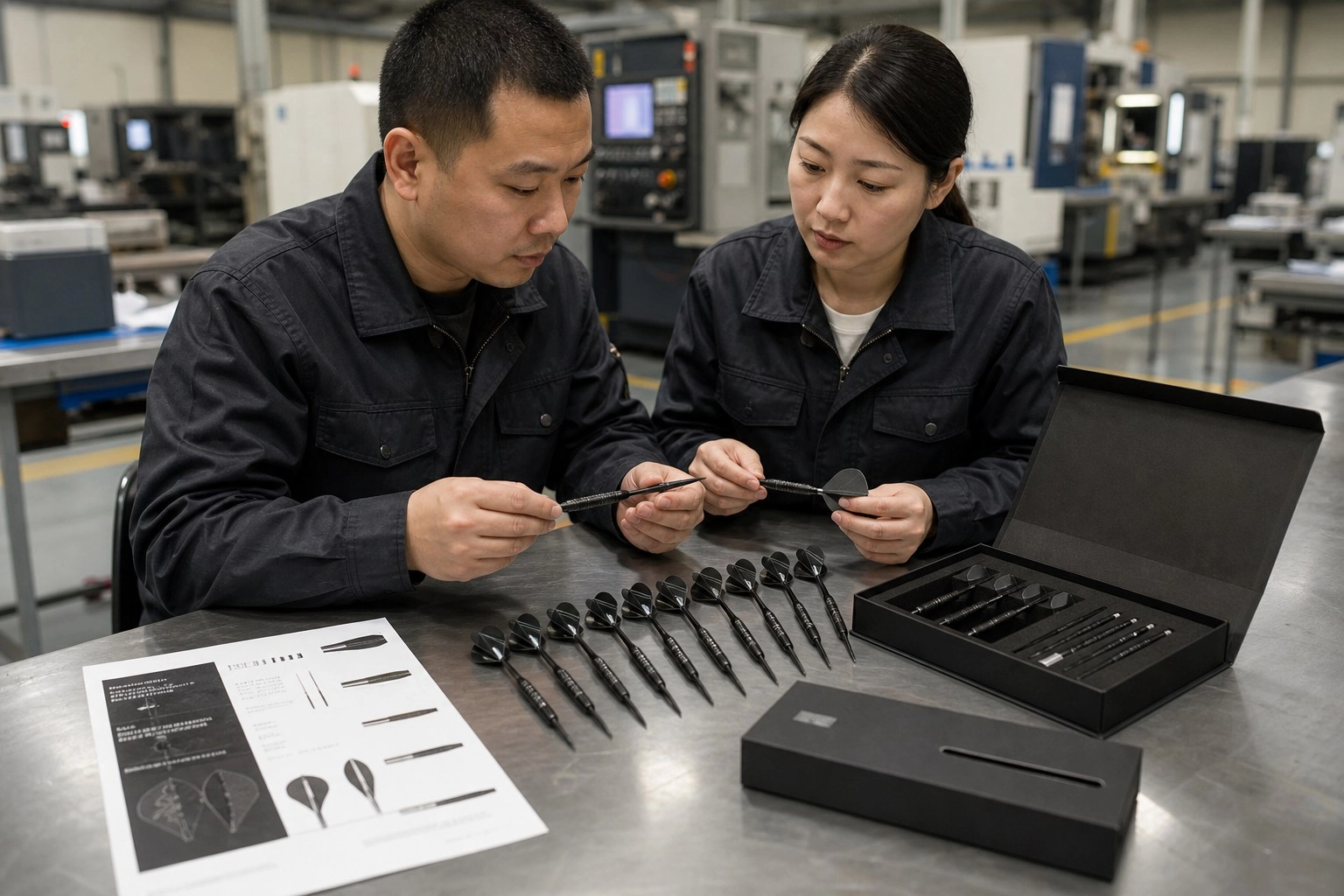
How We Helped a Dart Brand Refresh an Existing Product Without Rebuilding the Entire Collection
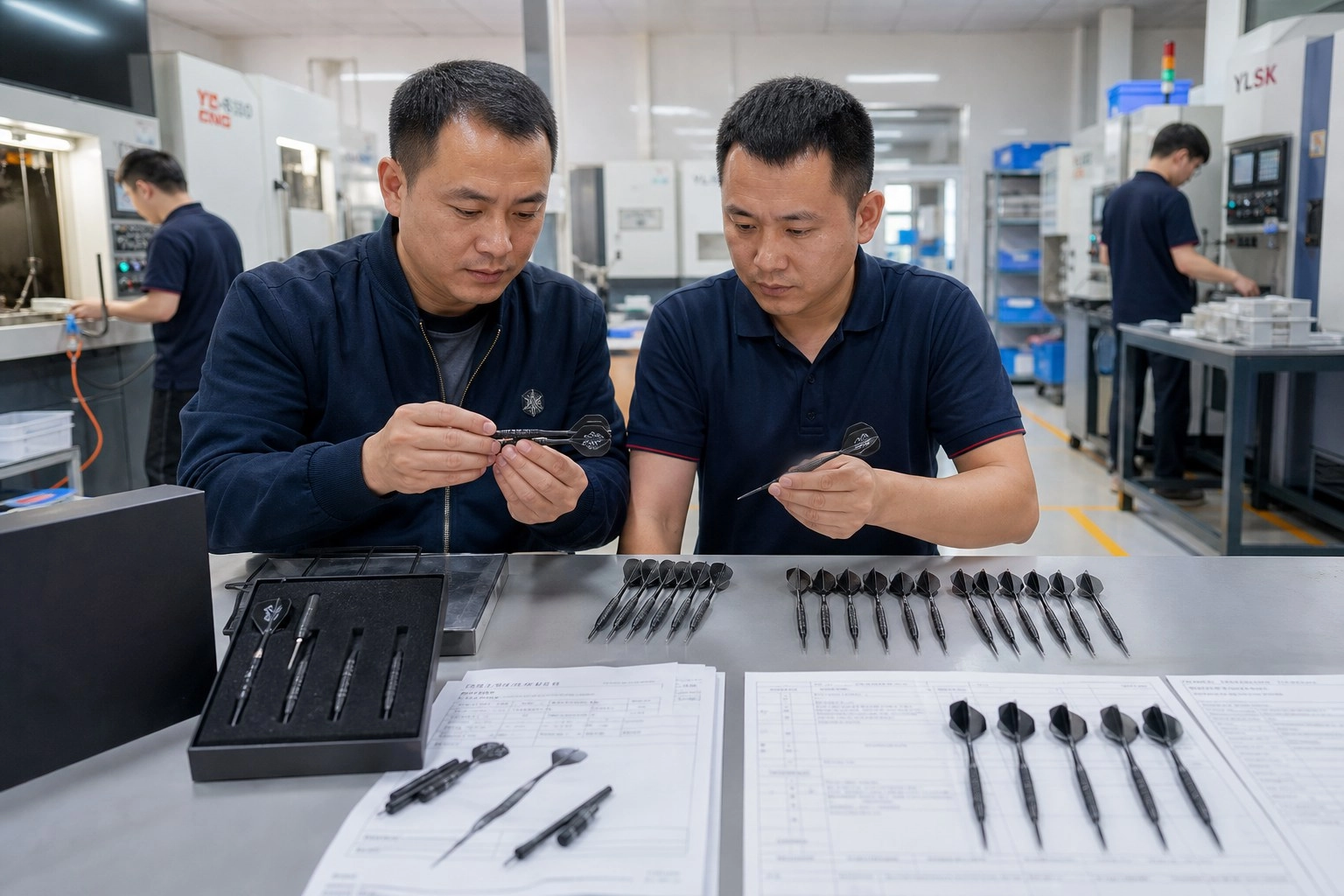
Why Product Version Control Matters for Private Label Dart Brands
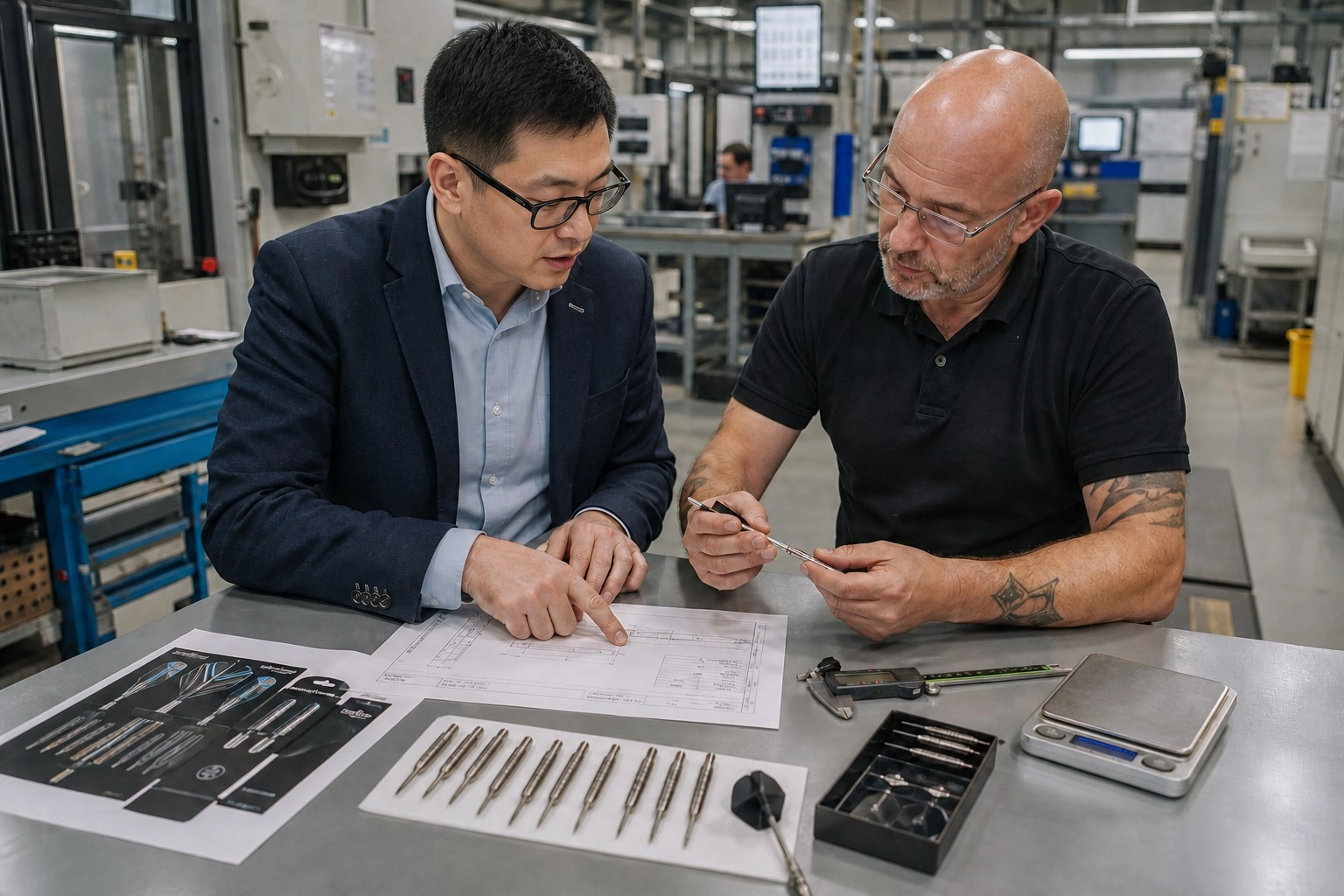
How We Supported a Retail Customer Through a Dart Product Specification Change

How to Calculate the Landed Cost of Imported Dart Products
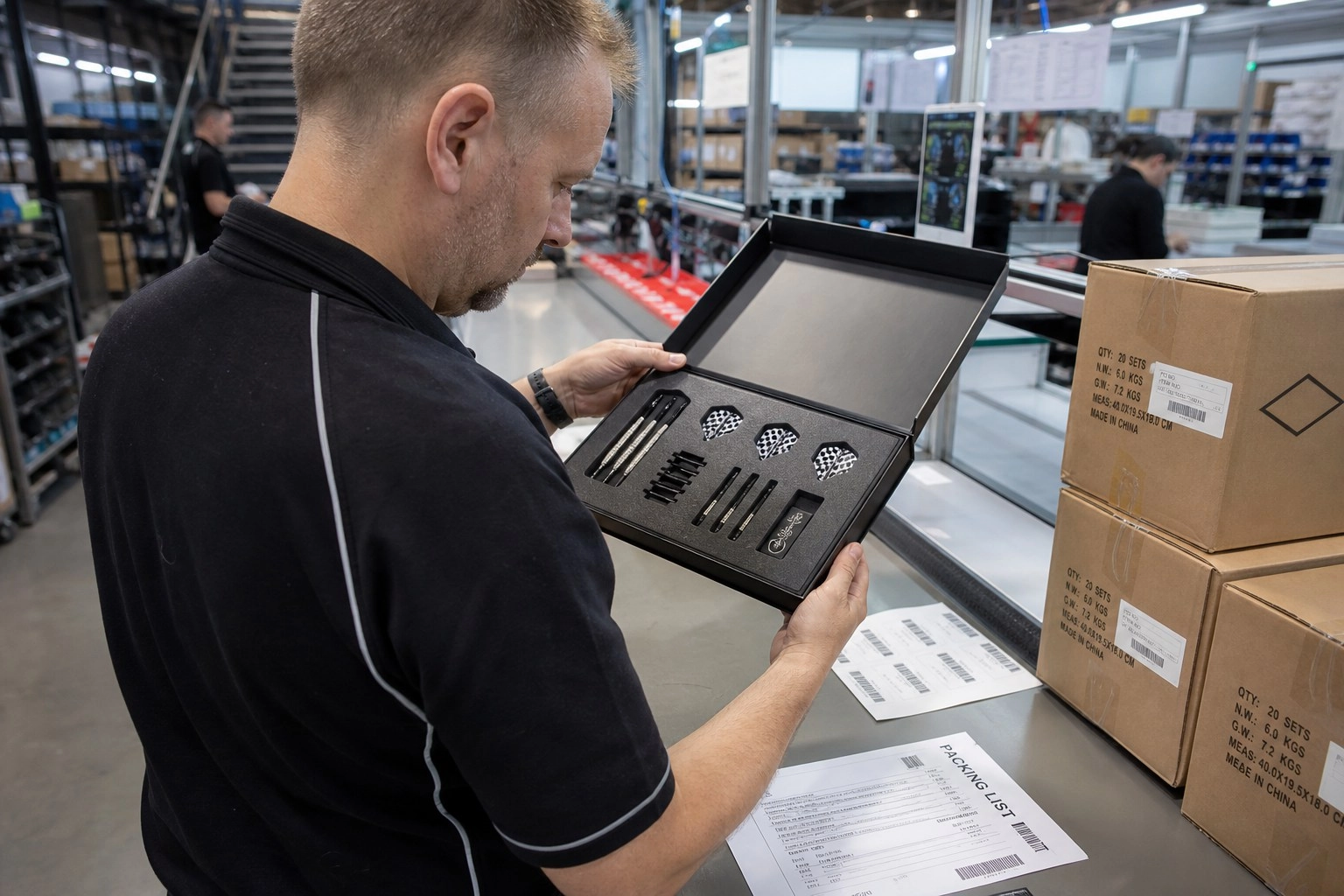
How We Helped an Online Dart Retailer Reduce Product Damage During International Shipping
Dartboard cabinets
Does the dart cabinet come with a scoreboard?
Yes, the dart cabinet is equipped with a blackboard and whiteboard for easy record of scores.
Payment method
Can large orders be paid in installments?
Yes, usually divided into 30% advance payment and 70% balance payment, the specific conditions need to be negotiated with us.
Dart boards
Is the factory quality certified?
Yes, we have passed ISO9001 quality certification and meet EU and US safety standards.
Dart bags
Does the dart bag support layered storage design?
Yes, customizable partitions can be used to store dart shafts, dart blades and other accessories.
Services provided
Do you provide customized marketing support for customers?
We provide customers with customized product promotional materials and marketing suggestions to help customers improve brand awareness and sales results.
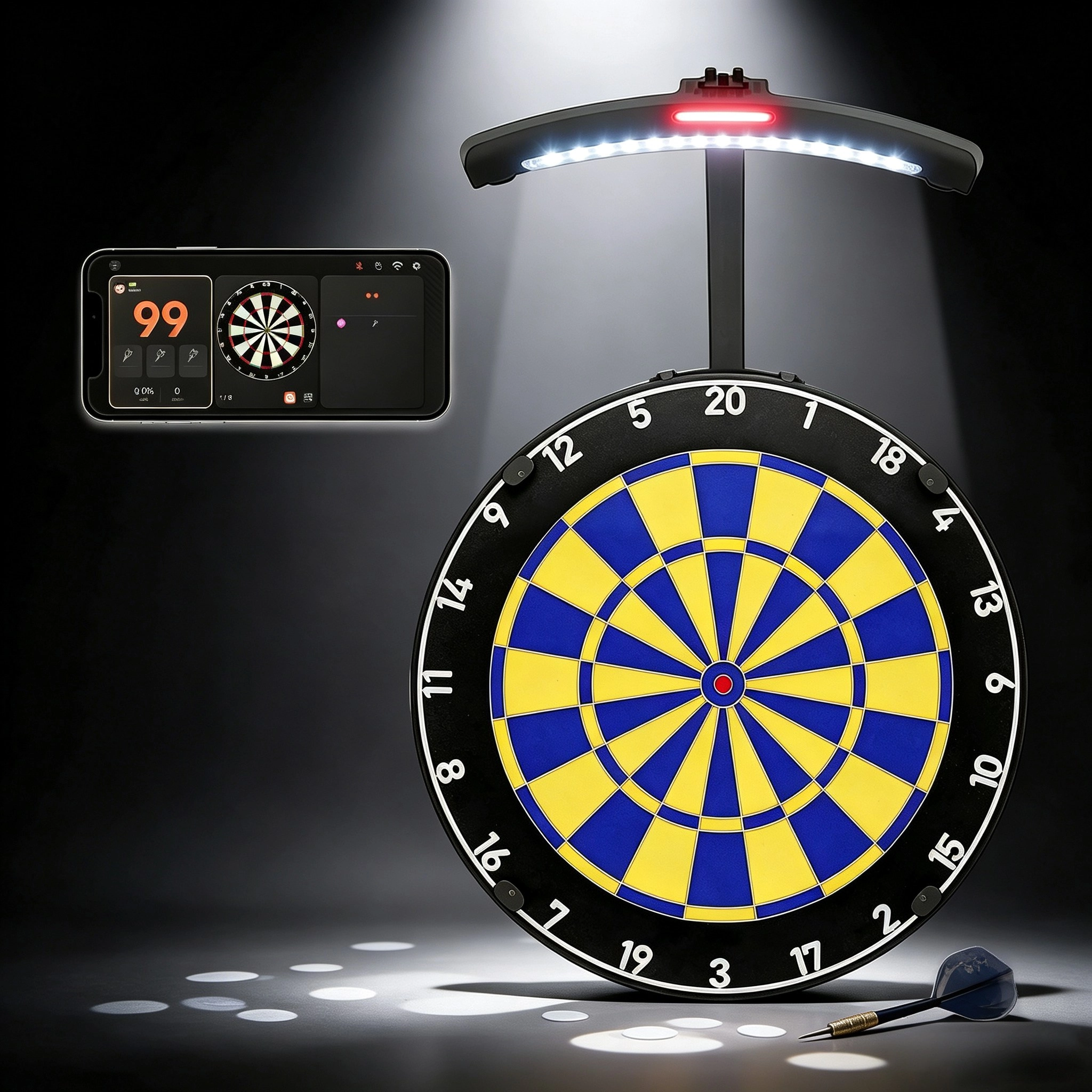
AI Dart Camera Scoring System With LED Dartboard Lights Automatic Electronic Dart Scoring Kit Smart Dart Auto Scorer
Our Smart Dart Scoring System transforms a traditional steel-tip dartboard into a smarter, connected playing experience. With automatic score recognition, real-time tracking, and performance data, it eliminates manual scorekeeping and helps players focus on playing and improving. Ideal for home entertainment, training, pubs, bars, and dart clubs, it offers an easy way to bring smart scoring to your existing dart setup.
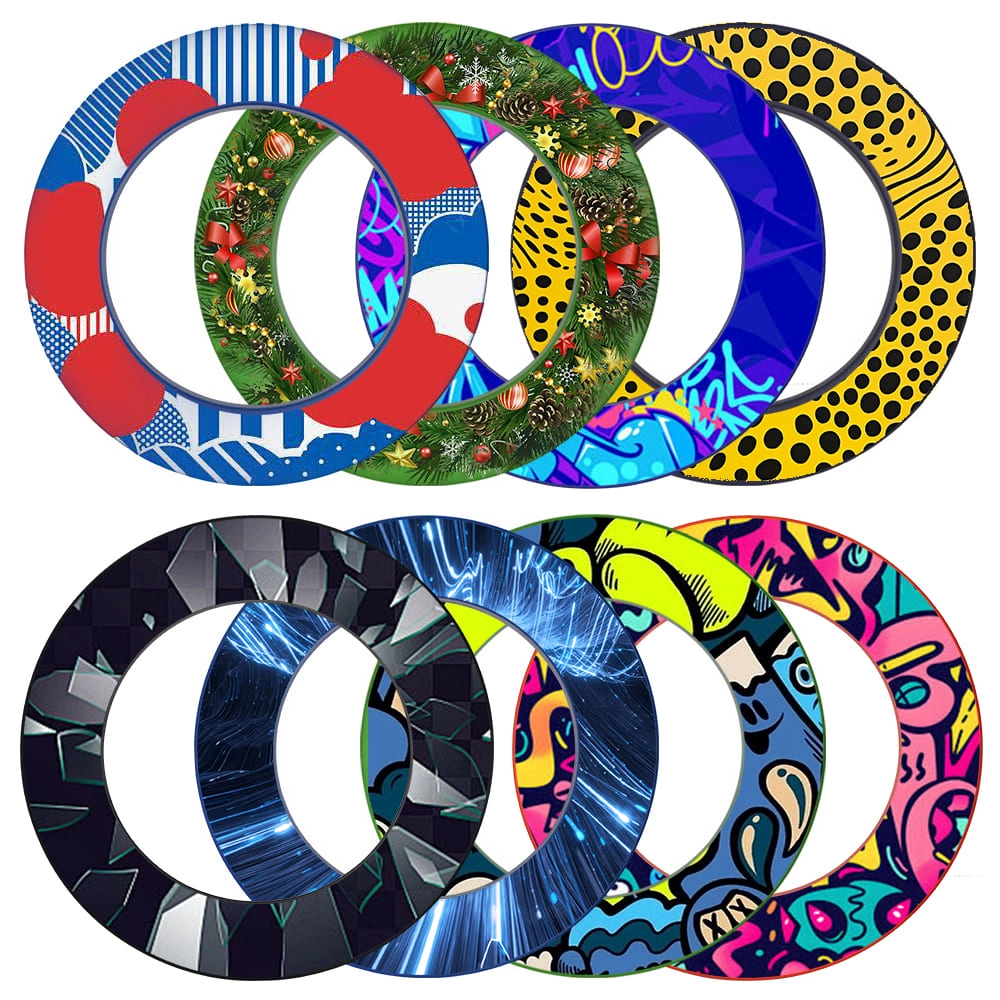
Wholesale custom pattern PU dartboard surround
PU dartboard surround is a dart board accessory made of high-strength polyurethane material, providing all-round protection to prevent darts from damaging walls or furniture and extend the service life of the dart board.

2BA Darts Flight Wholesale EVA Standard Shape OEM/ODM for Darts Retailers & Distributors
2BA Darts Flight designed for standard 2BA dart barrels. Made from durable PET material – tear-resistant, stable flight trajectory, and long-lasting performance. Custom color, logo & packaging accepted (OEM/ODM). Factory direct wholesale pricing. Ideal for darts retailers, sporting goods distributors & e-commerce resellers worldwide

EPU Dartboard Surround Bulk Order Available, OEM/ODM for Retailers & Distributors
EPU Dartboard Surround made from food-grade, eco-friendly EVA foam – biodegradable, odor-free & safe for home and commercial use. Fits standard 18" dartboards. Easy tool-free installation. Protects walls, absorbs dart impact. OEM/ODM available – custom color, logo & packaging accepted. Factory direct wholesale pricing. MOQ 50 pcs. Ideal for retailers, distributors & sporting goods importers.
Discover SKIPJACK’s Custom Dart Solutions
SKIPJACK offers darts custom-made solutions designed for excellence. Improve your game with our precision-crafted, customized darts.

At SKIPJACK, We offer darts customized solutions tailored to meet the unique needs of our clients through our ODM (Original Design Manufacturing) and OEM (Original Equipment Manufacturing) services.


Whatsapp: +8615919340906
SKIPJACK DARTS
SKIPJACK DARTS
SKIPJACK DARTS